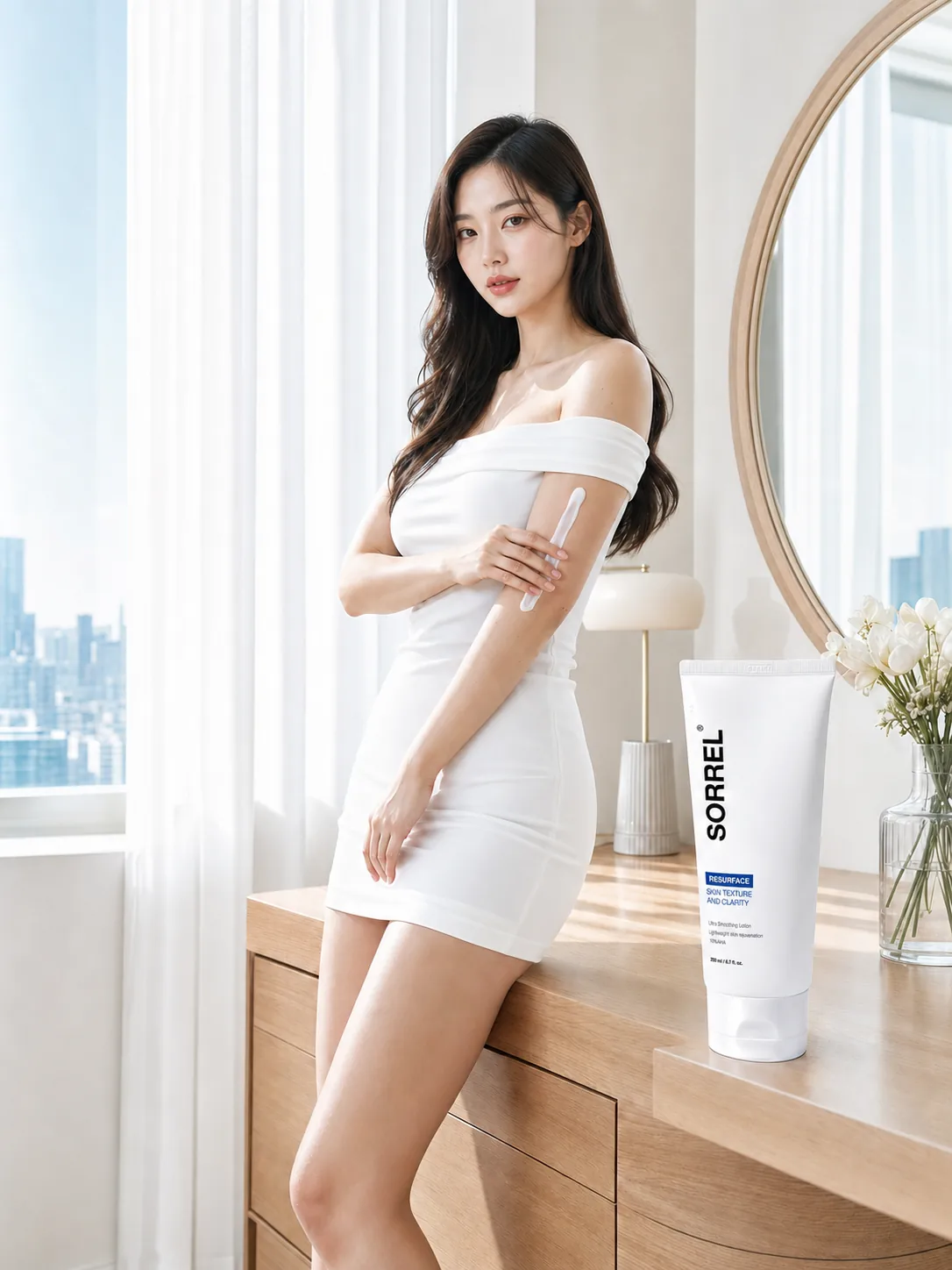
01 | Understanding the label
Ten percent is useful information, not the whole formula story.
AHA stands for alpha hydroxy acid, a family that includes glycolic and lactic acid. These water-soluble acids are used in cosmetics to support exfoliation at the skin surface. In body lotion, they combine the function of a leave-on exfoliant with the slip and comfort of a moisturising base.
A disclosed 10% concentration tells you the formula is intended as active body care. It does not predict exactly how strong the product will feel. Finished-product pH, the mix of acids, the lotion vehicle, the amount applied and the condition of the skin all influence use experience. Research on lactic acid has shown that both pH and concentration affect epidermal turnover, which is why comparing percentages alone is incomplete.
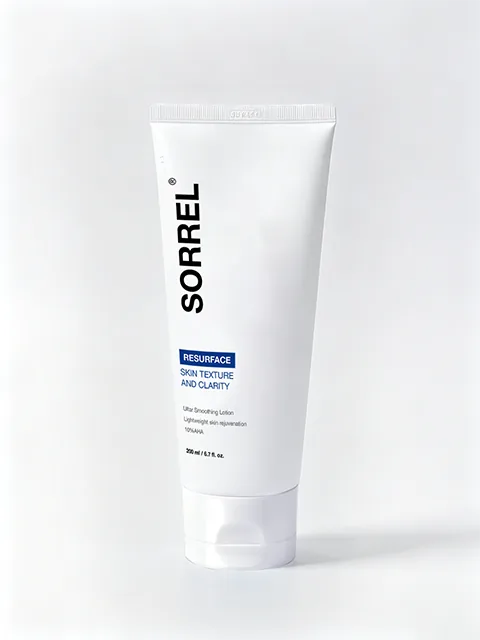
Body-area planning
Different areas may need different schedules.
Body skin is not identical from shoulder to ankle. Elbows and knees experience repeated movement and friction, lower legs are frequently affected by shaving and dryness, and upper arms may rub against fitted clothing. A single all-over schedule can therefore be less useful than treating selected zones and observing each one separately.
For the upper arms, use a thin layer and avoid repeatedly rubbing the product into visible bumps. On legs, separate application from shaving whenever the skin feels freshly sensitised. Elbows and knees may tolerate a regular routine, but adding more product does not guarantee a faster change. For the chest, neck or other thinner-feeling areas, be especially conservative and follow the label's intended use.
Exercise also changes routine conditions. Sweat does not make an AHA routine more effective, and applying a leave-on acid immediately before a hot, high-friction workout can feel uncomfortable. Evening application after showering, once the skin is dry and cool, is often easier to manage. Tight sportswear, backpack straps and repeated equipment contact are reasons to reduce frequency on affected areas.
Keep application away from intimate areas, eyes and mucous membranes. A body lotion should not be improvised as a facial peel or used on areas that the label excludes. When a product is new, change one variable at a time: one product, one area and a measured frequency.
02 | A gradual routine
How to introduce a 10% AHA body lotion.
Begin with clean, dry skin in the evening. Apply a thin, even layer to selected areas such as the arms, legs, elbows or knees. Starting with two or three evenings per week gives you time to observe how the skin responds. Increase frequency only if the treated areas remain comfortable.
Do not apply to broken, irritated, sunburned or freshly shaved skin. Avoid layering a new AHA lotion with scrubs or other leave-on exfoliants on the same area at first. More exfoliation is not automatically faster or better; it can simply create avoidable dryness and discomfort.
Patch and begin
Test a small area, then use two evenings if comfortable.
Observe
Watch for persistent stinging, redness or dryness.
Maintain
Use the lowest frequency that supports your routine.
03 | Realistic expectations
Consistency matters more than aggressive use.
A cosmetic AHA lotion supports smoother-looking surface texture over time. It does not diagnose or treat keratosis pilaris, acne, eczema or pigmentary disease. Changes in appearance are gradual and vary with the starting condition of the skin, friction, shaving, sun exposure and routine consistency.
Sun protection is not optional background advice. The US FDA says topically applied AHA cosmetics may increase skin sensitivity to the sun during use and for up to a week after stopping. Its guidance recommends sunscreen, protective clothing and limiting sun exposure. For Singapore, this is especially relevant because the National Environment Agency reports that the UV Index commonly reaches Very High or Extreme levels between 11am and 3pm on days with little cloud cover.
04 | Common questions
Questions people ask before starting.
Can I use it on my face?
A product labelled as a body lotion should be used as directed. Facial skin may have different tolerance, and the product has not necessarily been designed or assessed for facial application.
Can I apply moisturiser afterwards?
Yes. A plain moisturiser can be used if the skin needs additional comfort. Keep the first routine simple so it is easier to identify the cause of any irritation.
How much should I use?
Use enough to form a thin, even layer without repeatedly coating the same area. Follow the product label when it provides more specific directions.
Primary references
Sources
- US FDA: Labeling for Cosmetics Containing Alpha Hydroxy Acids
- The roles of pH and concentration in lactic acid-induced stimulation of epidermal turnover
- Singapore NEA: UV Radiation and UV Index
Educational cosmetic information only. It is not medical advice.
Continue the routine
Explore SORREL 10% AHA Body Lotion.
See product format, pricing, directions and care notes.
Before your first application
A five-point label check.
Confirm that the product is intended for body use, identify the declared AHA concentration, read the application frequency, locate the sun-sensitivity warning and check the physical pack for the current INCI. Record the first use date if you are likely to forget how quickly frequency changed. A simple routine log can distinguish gradual adaptation from repeated overuse.