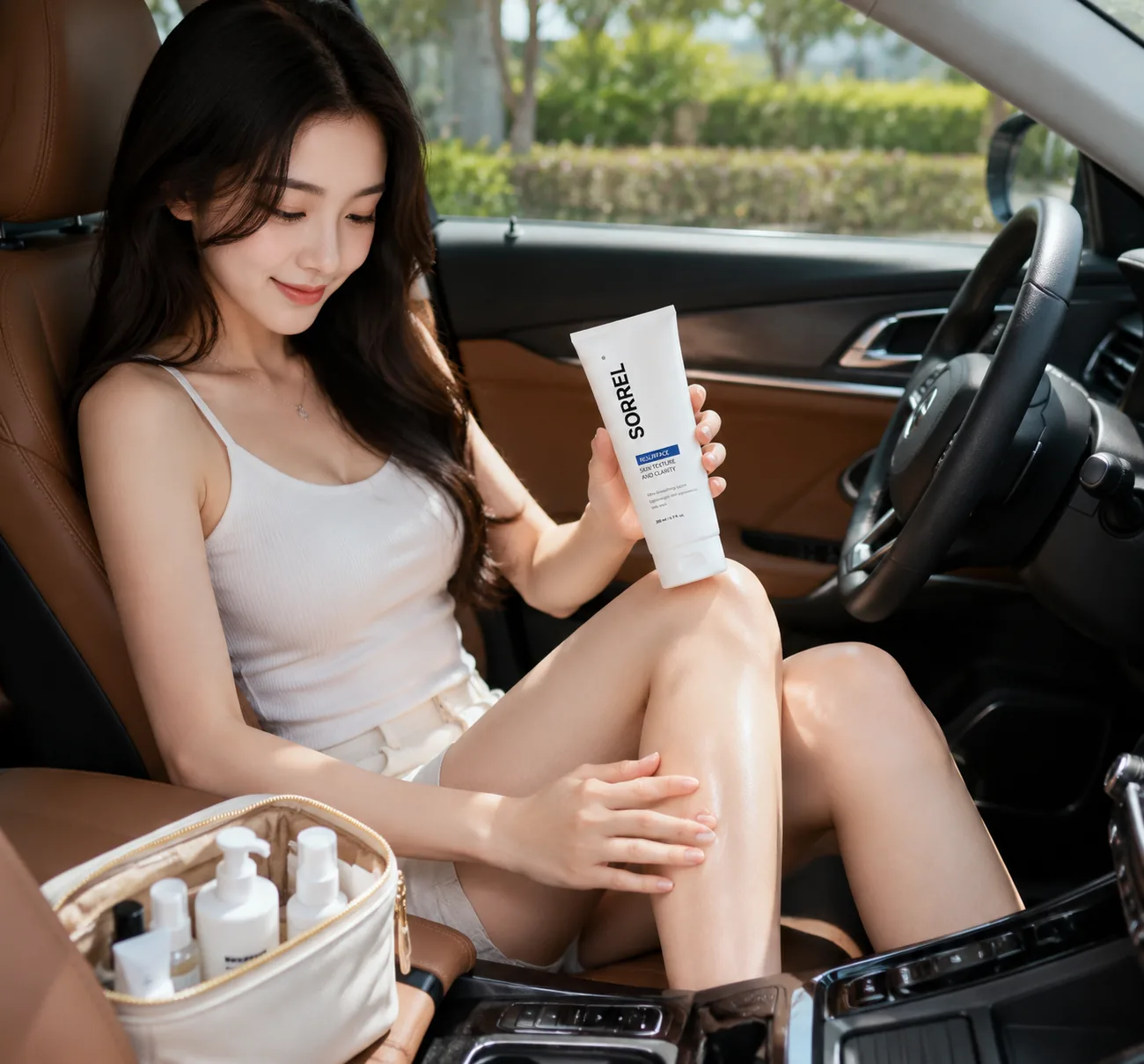
01 | Three environmental signals
Singapore skin routines move between different microclimates.
The first signal is UV exposure. Singapore sits close to the equator, and the National Environment Agency reports that the UV Index commonly reaches Very High or Extreme levels between 11am and 3pm on days with little cloud cover. Clouds and rain can reduce measured UV, but a bright or cooler-feeling day should not be treated as proof of low exposure.
The second signal is humidity. High outdoor humidity affects sweat, product spread and after-feel. Many people therefore prefer a lotion that absorbs without a heavy occlusive layer. This is a sensory and routine consideration; it does not make exfoliation unnecessary.
The third signal is the indoor transition. Air-conditioned environments are often less humid than outdoor air. A scientific review found that low-humidity environments can be associated with altered stratum-corneum water content, reduced elasticity and increased roughness, while also noting that the wider evidence is not completely uniform.
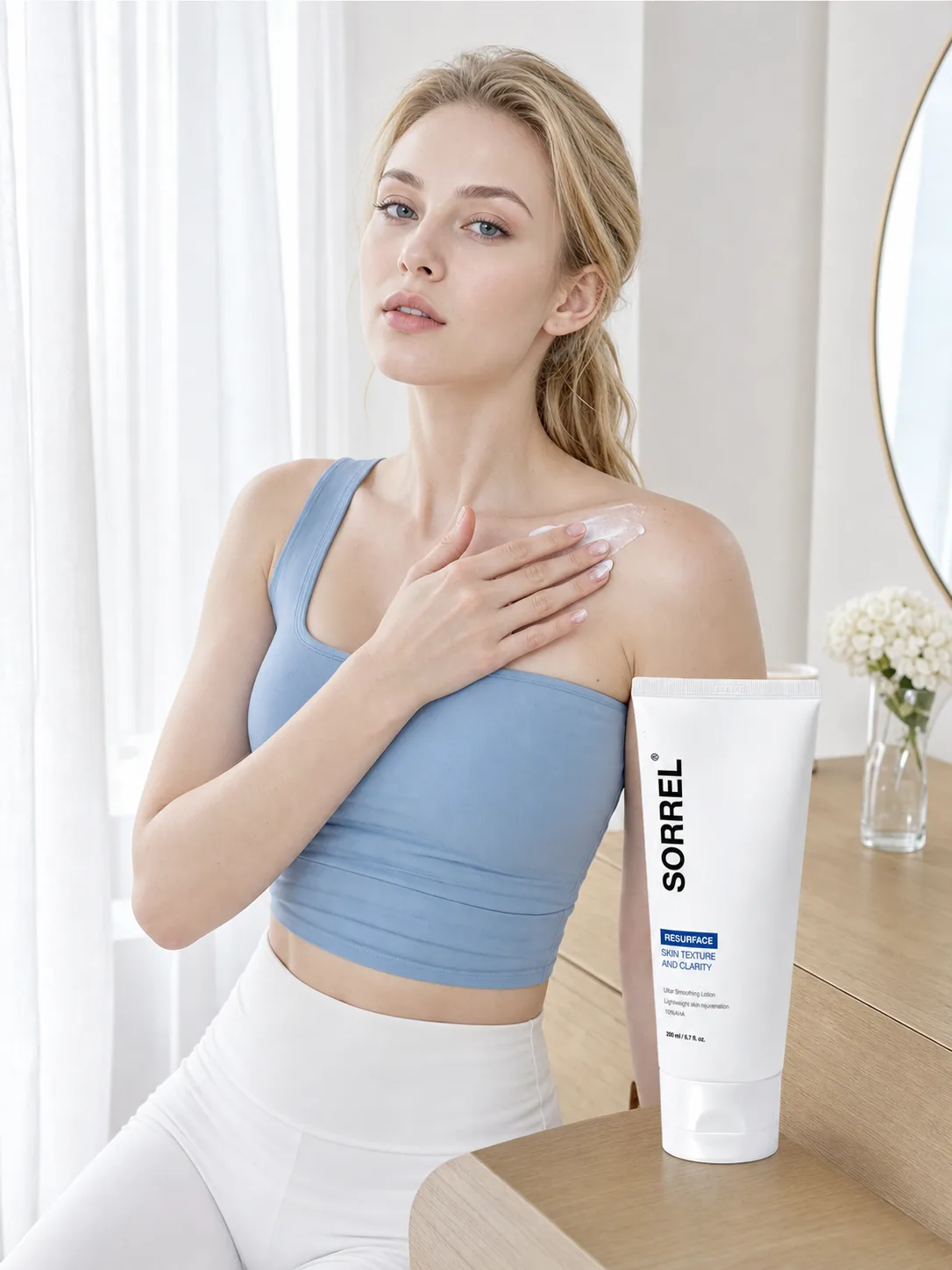
Planning around Singapore life
Adapt frequency to exposure, clothing and travel.
A stable routine does not mean applying on exactly the same nights regardless of circumstances. If a weekend includes prolonged outdoor activity, swimming or significant sun exposure, it can be sensible to pause exfoliation and focus on comfort and protection. Do not apply AHA to sunburned skin, and do not use it to try to remove a tan.
Clothing can reduce direct exposure, but coverage is not binary. Short sleeves, open footwear and sportswear can leave treated areas visible during commutes and outdoor meals. Sunscreen is most useful when paired with physical coverage and shade rather than treated as permission for unlimited exposure.
Travel introduces another humidity transition. Aircraft cabins and hotel air-conditioning may feel dry, while arrival outdoors can be hot and humid. Keep the routine simple during travel: a gentle cleanser, a known moisturiser, sunscreen and the AHA product only if the skin is already accustomed to it. A trip is not an ideal time to increase frequency or test several new actives.
People who exercise outdoors should consider both timing and friction. Applying AHA the night before is different from applying immediately before running in shorts under strong daylight. Use protective clothing where practical, apply sunscreen to exposed areas and reduce frequency when sweat, heat or repeated rubbing makes the skin feel less comfortable.
02 | The tropical AHA protocol
Use the clock to simplify the routine.
Dry the skin
Wait until the surface is clean and dry. Damp skin may change how a leave-on product spreads and feels.
Apply a thin layer
Start two or three nights weekly on selected body areas.
Protect exposure
Use sunscreen and protective clothing on treated areas exposed to daylight.
The FDA recommends a sunburn alert for AHA cosmetics because they may increase sensitivity to sunlight during use and for up to one week after stopping. Its recommended precautions include sunscreen, protective clothing and limiting sun exposure.
Singapore's NEA advises at least SPF 30, shade, sunglasses and a broad-brimmed hat when sun protection is needed, particularly during the 11am to 3pm period when UV levels are generally highest.
03 | Maintaining comfort
Exfoliation should not crowd out moisturising care.
If the skin feels tight, a plain moisturiser can be applied after the AHA lotion or used on alternate nights. The goal is not to make the skin peel visibly. Persistent stinging, redness or dryness is a reason to reduce frequency, not evidence that the formula is working harder.
04 | Common mistakes
What tends to make a tropical AHA routine harder.
Applying immediately after shaving
Shaving can leave the skin temporarily more reactive. Separate shaving and acid use when needed, and never apply to visibly irritated or broken skin.
Using a body scrub on the same night
Stacking physical and chemical exfoliation can increase friction and discomfort. Introduce one method at a time.
Assuming covered areas never see sunlight
Clothing coverage varies by fabric and activity. Consider which treated areas are actually exposed during commuting, outdoor meals and exercise.
Changing frequency because the weather feels cloudy
Use a consistent, tolerance-led routine rather than guessing UV intensity from heat or brightness. NEA publishes measured UV Index information for Singapore.
Primary references
Sources
- Singapore NEA: Ultraviolet Index and sun-protection advice
- US FDA: Labeling for Cosmetics Containing Alpha Hydroxy Acids
- Ambient humidity and the skin: review of healthy and diseased states
Educational cosmetic information only. It is not medical advice.
Build your routine
10% AHA, followed by disciplined protection.
Explore the SORREL body-care format and directions.
A weekly example
Keep the schedule flexible.
A new user might apply on Monday and Thursday evenings, moisturise on the remaining nights and review comfort after two weeks. An established user might add a third night while keeping outdoor-sport days free from exfoliation. This is not a prescription: it is an example of separating active nights so that the skin's response remains easy to read.
If a planned AHA night follows shaving, significant sun exposure or unusual friction, skip it. Missing one application does not undo a routine. In a high-UV climate, the ability to pause intelligently is more useful than chasing a perfect streak.